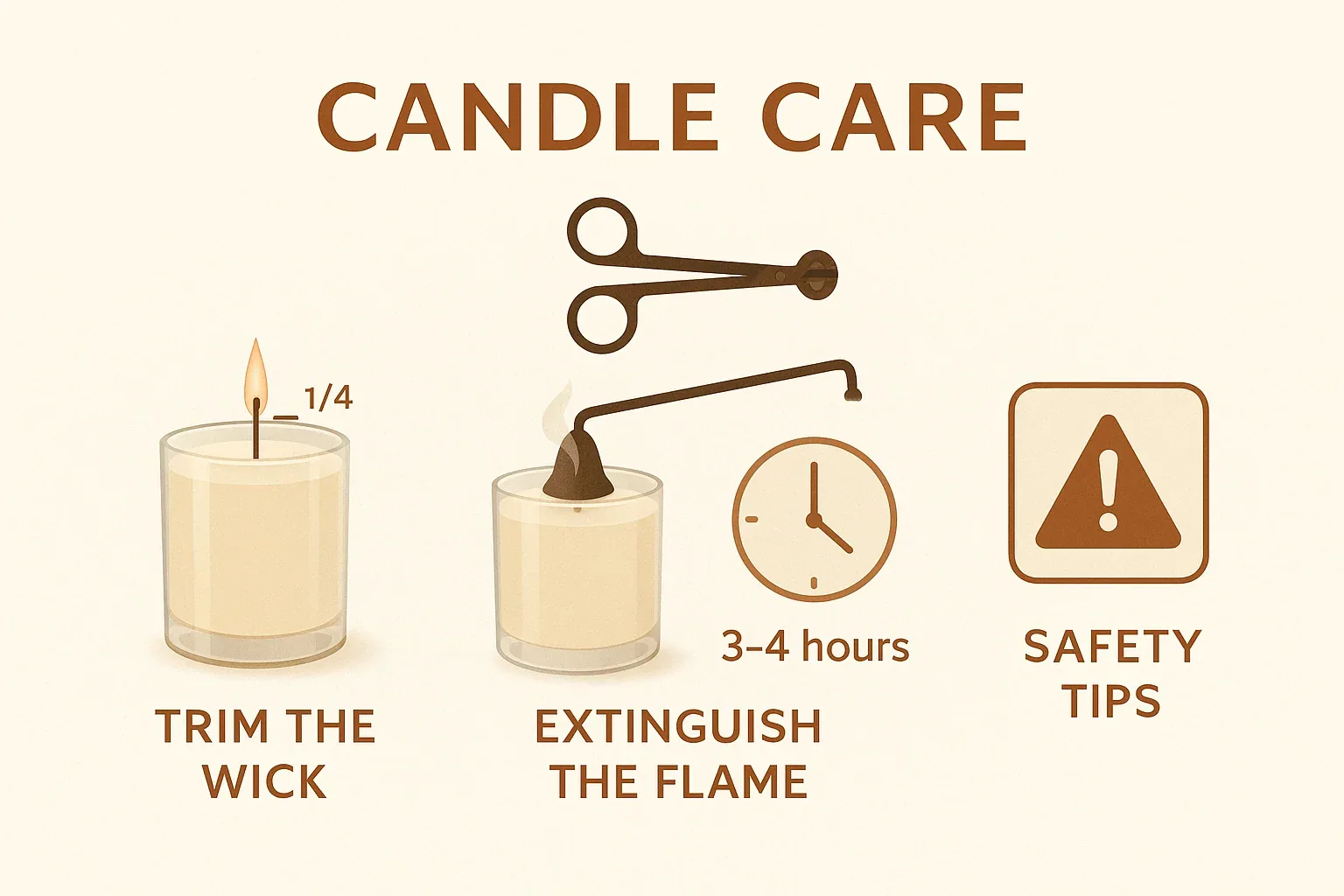
How to trim candle wicks for a cleaner, longer burn
Learn why trimming candle wicks matters, how short they should be, and simple tips to avoid soot and wasted wax.
The first time I lit a new candle and watched black soot start to build up on the glass, I wondered what I’d done wrong. Turns out, it was the wick. I hadn't trimmed it. Keeping candle wicks short isn’t just a detail for perfectionists. It changes how the candle burns, how it smells, and how long it lasts.
Why wick length matters
The wick controls how much wax the flame draws up. If it’s too long, it flares, gets smoky, and leaves soot on the jar. The flame can also flicker and burn too hot, wasting wax and destroying the scent. A short wick keeps the flame steady and low, letting the candle burn cleaner and slower. You’ll also notice fewer mushroom-shaped clumps at the top of the wick, which are just unburned carbon.
How short is short enough?
Most people aim for about 1/4 inch (6 mm). That’s shorter than you think. If you don’t have a ruler handy, it’s about the width of a pencil. I’ve trimmed with scissors in a pinch, but a proper wick trimmer is easier, especially for candles deep in a jar. Don’t skip trimming just because the candle is small or new. Even a fresh candle can have a wick that’s too long from the start.
When should you trim?
- Before every burn. Always check the wick before lighting, even if the candle only burned for a short while last time.
- After the candle cools and the wax hardens. Trimming a warm or soft wick can smear soot into the wax or break the wick off too short.
- If you see a mushroom tip. That’s a sign the wick is too long or has built up carbon.
How to trim without making a mess
Wick trimmers (those angled scissors) catch the trimmings, but regular scissors work if you’re careful. If your candle is in a tall jar, try tilting it and snipping sideways. Some people use nail clippers for smaller candles. Always tip out the trimmed bits before lighting, or you’ll end up with dead wick pieces floating in the wax, which can make the candle smoke.
If you go too short and the wick drowns in wax, don’t panic. Pour off a little melted wax when it’s warm, and coax the wick upright with tweezers or a toothpick. Let it cool, then try again. Avoid digging with hard tools, or you’ll chip the wax and end up with a bumpy surface that affects the burn.
Common mistakes and fixes
- Lighting without trimming. Even one missed trim can blacken your jar.
- Cutting the wick while the wax is still soft. Wait until it’s set to avoid mess.
- Leaving trimmings in the wax. Always tip them out.
- Cutting the wick too short. It won’t light, or it’ll drown.
I used to think trimming wicks was fussy, but after seeing the difference, a cleaner jar, brighter flame, and longer burn, I won’t skip it again. The right wick height is a small habit that makes every candle evening smoother.